
Sensō-ji
浅草寺
A long tradition in rebuilt buildings
Sensō-ji’s foundation story begins with fishermen finding an image of Kannon in the Sumida River in 628. Treat that as the temple’s religious account of its beginnings. The temple’s age does not mean every visible building dates from that period: its main hall was rebuilt in 1958 after wartime destruction. The important distinction is between the continuity of worship and the age of the structure sheltering it.
Follow the sequence of gates
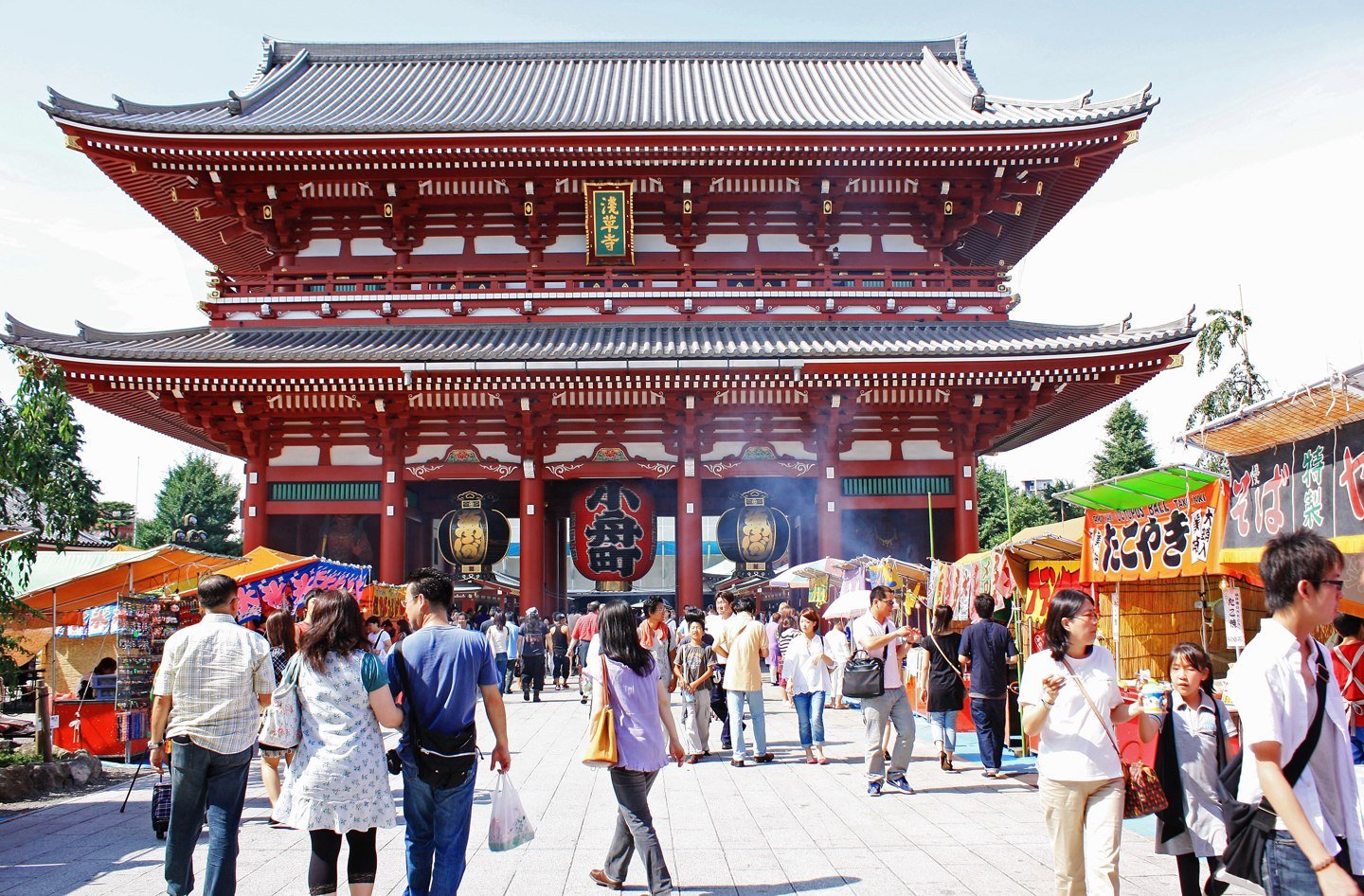
Use the official precinct guide to distinguish Kaminarimon, the outer gate, from Hōzōmon nearer the main hall. Nakamise is the shopping approach between the major gateways. The photograph on this card shows Hōzōmon, not Kaminarimon. Keeping those names straight makes it easier to orient yourself, arrange a meeting point and understand photographs of the precinct.
Kannon is the centre of the visit
The temple is devoted to Kannon, the bodhisattva associated with compassion. Its principal image is not displayed for ordinary viewing. That is not a missing exhibit: concealment is part of the temple’s tradition. Read the temple’s guidance and observe worshippers without treating religious practice as a performance to capture.
Look for continuity rather than a single date
Compare the work performed by the approach, gates and main hall: arrival, transition and worship. Then ask how a rebuilt place can preserve a living tradition. This is a different way to read the site from simply seeking its oldest object. Before travelling, use the temple’s own overview and event information to decide which parts of the precinct matter to your visit and check any temporary restrictions on the day.
Sources and next steps
Original English guide · Sources reviewed 6 October 2026. Operational details can change.
- DiscoverBuddhist temple devoted to Kannon
- NoticeTokyo’s oldest temple
- RememberAsakusa, Tokyo
These are active places of worship. Follow local signs, worshippers’ space and each site’s photography rules.
Hōzōmon gate at Sensō-ji, 2009. Andrea Schaffer · CC BY 2.0 · Photo details
Official source · Source checked 2026-10-06 · Original English guide